ChatGPT Adult Mode: Is It Live Yet? (Status Explained)
ChatGPT adult mode is still delayed — OpenAI's official status, what the feature would allow, why it was pushed back, and answers for parents.
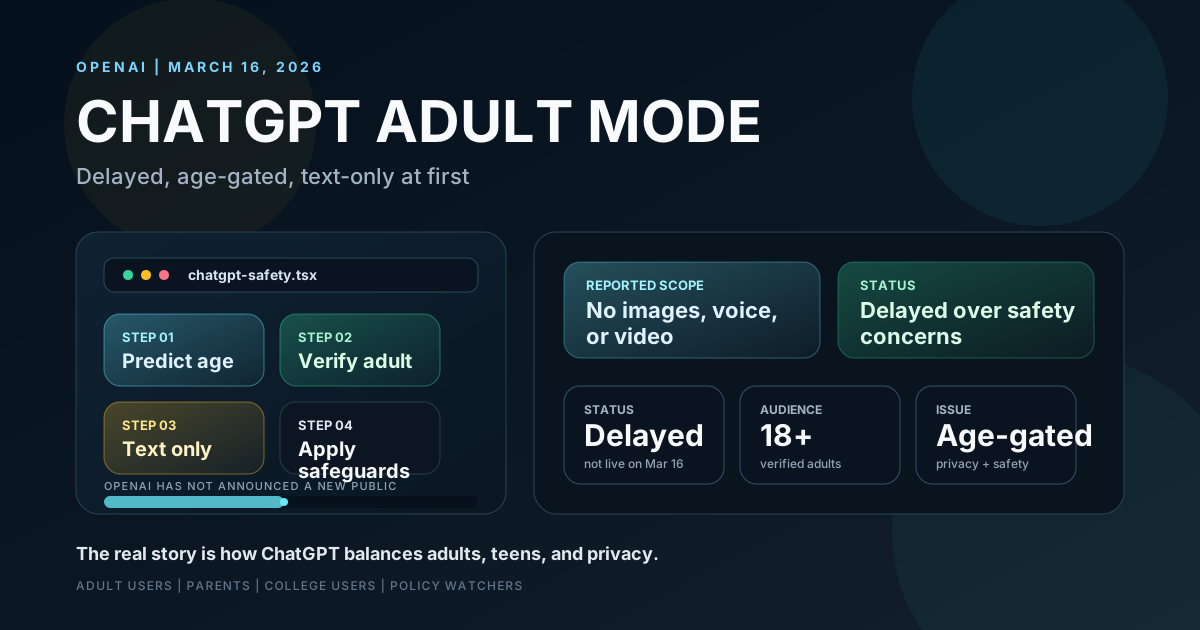
ChatGPT adult mode is an opt-in setting OpenAI has said would let age-verified adults have less-restricted, more mature conversations, while keeping stronger guardrails in place for teenagers. It is one of those AI stories that sounds narrow until you translate it into normal human terms. See also ChatGPT Now Teaches Math and Science With Interactive Visuals.
This is not really a niche feature story. It is a mass-market internet policy story about what happens when a product used by hundreds of millions of people tries to give adults more conversational freedom without making life less safe for teenagers.
The first fact to keep straight is the most important one: as of March 16, 2026, ChatGPT adult mode is not live. What exists right now is a mix of public reporting about the planned feature and official OpenAI documents about age prediction, teen experiences, and parental controls.
For U.S. readers, that combination matters more than the headline alone suggests. Adults care about whether ChatGPT should stop acting overly paternalistic. Parents care about whether under-18 users could slip into the wrong experience. Privacy-sensitive users care about whether age checks turn into selfie or ID verification. That is why this story is drawing attention well beyond tech circles.
CHATGPT ADULT MODE AT A GLANCE
900M+
Weekly Users
OpenAI says ChatGPT now reaches this scale
13+
Minimum Age
intended ChatGPT age floor
18+
Adult Access
reported target for fuller experience
March 6
Delay Confirmed
OpenAI pushed the feature back again
READ IT FROM THE ANGLE THAT MATCHES YOUR LIFE
This is one of those AI news stories where the right framing changes everything.
Use this to skip to what matters
ADULT USERS
You want to know what OpenAI may finally allow
Start with the live-status section and the scope table. That will tell you what the reported feature is and what it is not.
Focus on
OutcomeYou will know whether this is real, what is delayed, and what level of freedom is actually being discussed.
PARENTS
You care about teen access and household safety
Jump to the delay section, the U.S. angle, and the FAQ on parental controls and age prediction.
Focus on
OutcomeYou will leave with a clearer sense of what OpenAI says it is doing to keep minors out of the adult path.
PRIVACY + POLICY
You care about age verification and platform governance
Read the timeline and the tradeoff section together. That is where the real product-policy tension shows up.
Focus on
OutcomeYou will see why this is a governance story disguised as a feature story.
TL;DR
- ChatGPT adult mode is still delayed as of March 16, 2026.
- On March 6, 2026, Axios and TechCrunch reported that OpenAI delayed the feature again because it needed more time to get it right.
- On March 16, 2026, The Verge reported that the expected launch version was text-only, not an all-media adult product.
- The reporting suggests the feature is aimed at verified adults, not general users and not minors.
- OpenAI’s own safety roadmap already includes age prediction for suspected teens, more restrictive under-18 experiences, and parental controls.
- The real public-interest question is not “Will ChatGPT get more explicit?” It is whether a mass-market AI product can give adults more latitude without weakening youth safety or pushing users into invasive age checks.
- For U.S. readers, this is especially relevant because it intersects with family use, college-age users, online safety, privacy expectations, and mainstream platform policy.
Is ChatGPT adult mode live right now?
No.
That point matters because a lot of social chatter makes this sound like a launch. It is not. The cleanest way to describe the situation on March 16, 2026 is this:
- the feature has been reported publicly
- the product direction is fairly clear
- the launch is still delayed
Axios reported on March 6, 2026 that OpenAI pushed the feature back again. TechCrunch separately reported the same delay. Then on March 16, 2026, The Verge added more detail about the planned shape of the rollout, saying the first version was expected to focus on adult text conversations, not images, voice, or video.
That means the story people should read is not “OpenAI launched porn in ChatGPT.” The story is closer to this:
OpenAI appears to be building a more permissive adult conversational mode, but it still does not think the safety, age-gating, and policy edges are ready enough to ship publicly.
WHAT THE STORY ACTUALLY IS
The public conversation gets cleaner once you separate the feature itself from the surrounding safety system.
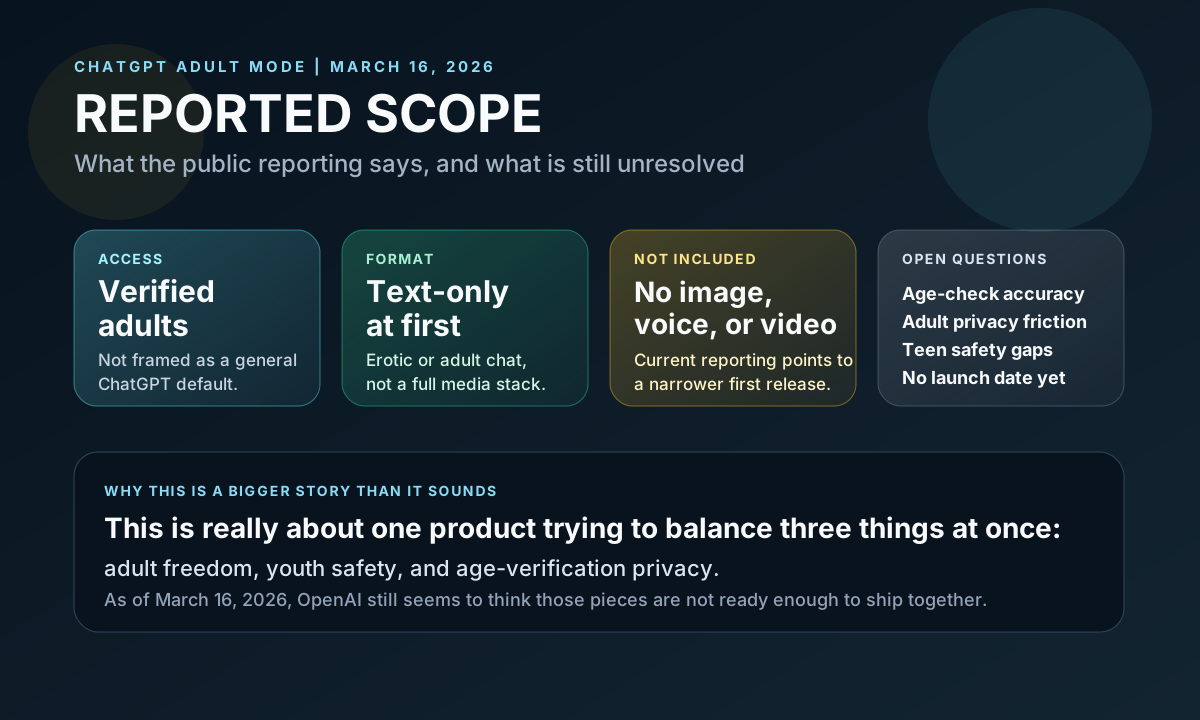
REPORTED SCOPE
A text-first adult chat experience for adults
The March 16 reporting points to erotic or sexually explicit text conversations for adults rather than a broad media product.
- Text-based conversations
- Adult-targeted access
- Not framed as a general-user default
NOT LIVE
This is still a delayed product, not a launch
The feature remains delayed as of March 16, 2026, with no new public date from OpenAI.
- Delay confirmed March 6
- No public release date
- Treat current details as reported shape
SAFETY STACK
Age prediction and teen protections are already part of the setup
OpenAI has already rolled out systems intended to identify under-18 users and give them a more restrictive experience.
- Predicted teens get tighter defaults
- Parents can link accounts
- Adults can correct age mistakes
WHY IT IS TRENDING
It sits right at the intersection of freedom, family safety, and privacy
That combination is why this reads like mainstream consumer-tech news instead of a niche model update.
- Household relevance
- College-user relevance
- Policy and trust implications
What would ChatGPT adult mode actually allow?
Based on the reporting available as of March 16, 2026, the likely launch direction is narrower than many people assume.
The feature is being discussed as an adult text experience, not a full adult-content platform. The Verge reported that the planned rollout was expected to be text-only at first. That is a very different proposition from enabling adult images, live visual generation, or voice-first erotic roleplay.
That distinction matters because it changes how readers should evaluate the story:
- this is about conversational permissiveness
- not an immediate shift into all-format explicit media
| Question | What current reporting suggests | What that means for readers |
|---|---|---|
| Is it live today? | No. It is still delayed as of March 16, 2026. | Read this as a reported upcoming feature, not a launch guide. |
| What format is expected first? | Text-only adult conversations | Do not assume image, voice, or video support from current reporting. |
| Who is it for? | Verified adults, not general under-18 access | Age prediction and verification are central to the rollout. |
| Does it mean safety rules disappear? | No. The whole delay suggests safety limits still matter heavily. | Expect a narrower adult allowance, not a guardrail-free product. |
| Why is this so sensitive? | Because ChatGPT is already a mainstream consumer product. | A mistake here would hit adults, teens, and parents at household scale. |
The strategic shift underneath all of this is simple.
OpenAI has been moving toward the idea that adults should get a more adult-appropriate experience, while under-18 users should get a tighter one. “Adult mode” is just the most attention-grabbing version of that policy direction.
Why did OpenAI delay it?
This is where the story becomes more important than the headline.
If OpenAI were only optimizing for adult-user demand, it likely would have shipped sooner. The fact that it did not tells you that the company thinks the downside risk is real.
The public reporting points to a cluster of concerns:
- whether under-18 users could still slip through
- whether age prediction is reliable enough for a high-risk feature
- whether adult users would accept stronger verification when the system is uncertain
- whether OpenAI can defend the product decision politically if something goes wrong
The Verge’s March 16 report, citing Wall Street Journal reporting, described internal concern around child-safety implications. That lines up with OpenAI’s own official materials, which already show a clear policy hierarchy: when there is tension between adult freedom, teen safety, and verification accuracy, the company is willing to add friction rather than move fast.
-
September 18, 2025
OpenAI lays out the adult-vs-teen policy direction
Sam Altman says the company wants systems that give adults more latitude while creating age-appropriate experiences for younger users.
-
September 29, 2025
Parental controls arrive for ChatGPT
OpenAI launches linked parent controls to help families manage teen use and visibility.
-
January 20, 2026
Age prediction rolls out
OpenAI says it can detect likely under-18 users and move them into a more restrictive teen experience, with identity checks available to correct mistakes.
-
March 6, 2026
Adult mode gets delayed again
Axios and TechCrunch report that OpenAI pushes the feature back because it needs more time before release.
-
March 16, 2026
Reporting clarifies that the first version is expected to be text-only
The Verge reports a narrower initial scope, which makes the remaining safety tension easier to understand.
The takeaway is not “OpenAI changed its mind.”
The takeaway is that OpenAI seems to believe the product idea is directionally right, while the deployment conditions are still fragile.
Why this matters so much to U.S. adults, parents, and college-age users
This is where the audience targeting really matters.
If you write this story as generic AI gossip, it looks unserious. If you write it from the standpoint of the people most likely to care, it becomes obviously mainstream:
- adult ChatGPT users who want a less restrictive assistant
- parents who do not want teens routed into adult experiences by mistake
- college-age users who sit near the adult threshold but still care about privacy and identity checks
- households where ChatGPT is already a shared, familiar product
The U.S. angle is especially strong because OpenAI’s parental-control rollout was built with organizations and regulators that U.S. families instantly recognize, including Common Sense Media and the attorneys general of California and Delaware. That makes this more than an internal platform experiment. It is part of a broader public-facing trust strategy.
OpenAI also now says ChatGPT reaches 900 million weekly users, which changes the stakes. Once a product is that mainstream, an adult-content policy debate is no longer about edge-case users. It becomes a platform-governance question that ordinary adults, parents, and students understand immediately.
The real tension: adult freedom, teen safety, and verification privacy
This is the part most headlines flatten.
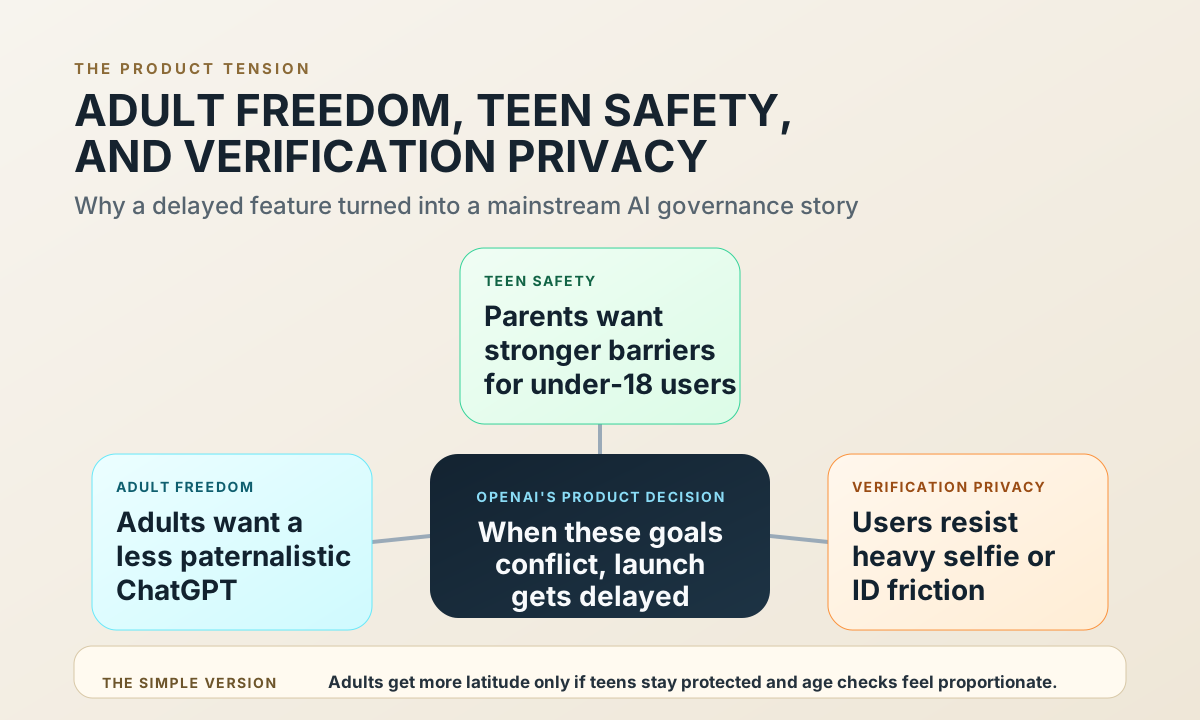
OpenAI is trying to satisfy three groups that do not want the same thing:
- Adults who want the model to stop refusing every mature topic by default.
- Parents and safety advocates who want strong barriers around teen access.
- Privacy-sensitive users who do not want a casual chatbot turning into an ID-check funnel.
Those goals can conflict quickly.
If you make the adult experience too easy to reach, critics will say teens can slip through. If you make it too hard to reach, adults will say the product is infantilizing them. If you solve the problem with aggressive verification, another set of users will object that the privacy cost is too high.
That is why this story matters. It is not only about sexual content. It is about how mainstream AI products decide who gets what kind of freedom, under what level of certainty, with what amount of personal-data friction.
WHY PEOPLE SEE THIS STORY DIFFERENTLY
Both sides are reacting to something real. The disagreement is about which risk deserves priority.
WHY SOME ADULTS WANT IT
A less paternalistic ChatGPT for grown-up conversations
Many adult users do not want a household AI assistant that treats all mature conversation as off-limits by default.
- More natural creative and fictional writing
- Less overblocking on adult topics
- A product that treats verified adults like adults
- A clearer distinction between minor and adult experiences
WHY CRITICS ARE UNEASY
A mainstream chatbot has to think about mistakes at household scale
Parents, schools, and policy watchers are less focused on adult freedom than on what happens when age detection or moderation fails.
- Teen misclassification risk
- Pressure to use selfie or ID checks
- Hard moderation decisions at scale
- Reputational fallout if edge cases go wrong
What to watch before OpenAI ships it
This is the practical section.
If you want to know whether OpenAI is actually ready to launch adult mode, ignore the loudest hot takes and watch for concrete implementation details.
FIVE THINGS THAT WILL MATTER MOST
Track progress as you work through the list
0%
0/5 done
Those details will tell you more than any headline ever will.
Final take
The most useful way to understand ChatGPT adult mode is not as “OpenAI wants erotica in ChatGPT.”
The more accurate read is this:
OpenAI is trying to draw a sharper line between what adults can do, what teens cannot do, and how confidently the product can tell the difference.
That is why the story has traction. It touches several instincts at once:
- adult autonomy
- parenting anxiety
- teen online safety
- privacy around age verification
- trust in a chatbot that now operates at mass-market scale
For U.S. readers especially, that is a highly clickable and highly relevant combination. It is about the kind of AI platform ChatGPT is becoming inside ordinary households, campuses, and daily life.
If OpenAI eventually ships this well, the long-term story will not just be “adult mode exists.” The long-term story will be that ChatGPT became more explicitly age-tiered, and that a mainstream AI company finally had to show how adult freedom, child safety, and privacy can coexist in one product.
That is the real story worth following.
FAQ
Questions readers usually have
The repeat questions are mostly about live status, age verification, teen safety, and whether this is really a text-only feature.
Sources
- The Verge: OpenAI wants to give ChatGPT an adult mode
- Axios: OpenAI delays ChatGPT’s “adult mode” again
- TechCrunch: OpenAI delays the release of ChatGPT’s adult mode
- OpenAI: Building toward age-appropriate experiences
- OpenAI: Age prediction now available in ChatGPT
- OpenAI: Introducing parental controls in ChatGPT
- OpenAI: OpenAI for Families
Google Search · Preferred sources
Prefer this site on Google
If you already read this writing, add umesh-malik.com as a Preferred Source. Google can then highlight it with a preferred badge in Top Stories, AI Overviews, and AI Mode — for you, not as a site-wide ranking boost.
Related Articles

LLM Engineering
GPT-5.6 API: Pricing, Thinking Modes, and the Shared Context Trap
GPT-5.6 API pricing ($1-$30/1M), the Ultra and Max thinking modes, and a 1.05M context window that is shared — with the fine print that breaks agent loops.
LLM Engineering
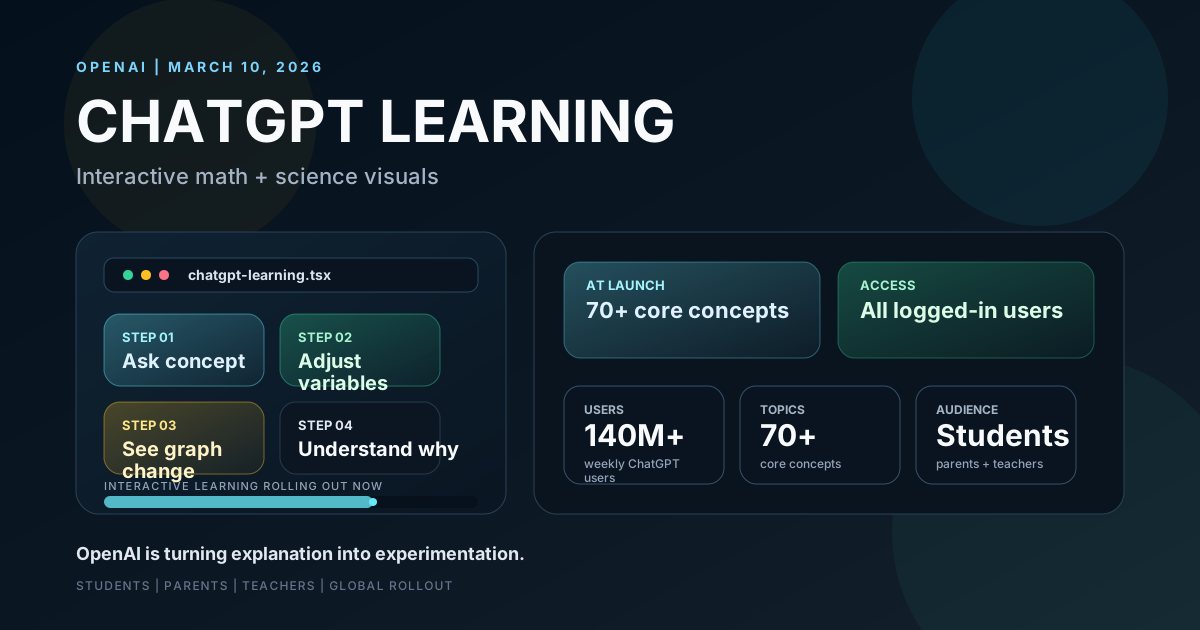
ChatGPT Interactive Math and Science Visuals: What to Know
ChatGPT interactive math and science visuals launched in March 2026: how the new learning modules work, who gets access, and why students benefit.
LLM Engineering
GPT-5.4 for Agents: Computer Use, MCP Tool Calls, and Real Pricing
GPT-5.4's native computer use and MCP tool calls are the real upgrade for agents. What holds up in a loop, what the 1M context costs, and how Pro compares.
Keep reading
Get new posts on AI, Claude Code & LLMs
New deep-dives on AI engineering, Claude Code, and developer tooling — follow along however you prefer.
About the Author

Software engineer writing about AI, Claude Code, LLMs, OpenAI, Anthropic, and developer tooling. 5+ years building production systems at Expedia Group, Tekion, and BYJU'S.